A Transformative Vision or a Risky Gamble
The Maldives International Financial Centre (MIFC) is one of the most ambitious projects in the nation’s history. With an estimated investment of $8.8 billion, it aims to turn Malé into a global financial hub, reducing reliance on tourism and fishing. The project promises economic diversification, job creation, and infrastructure development, but it also raises concerns about governance, corruption, and financial oversight.
A New Economic Landscape
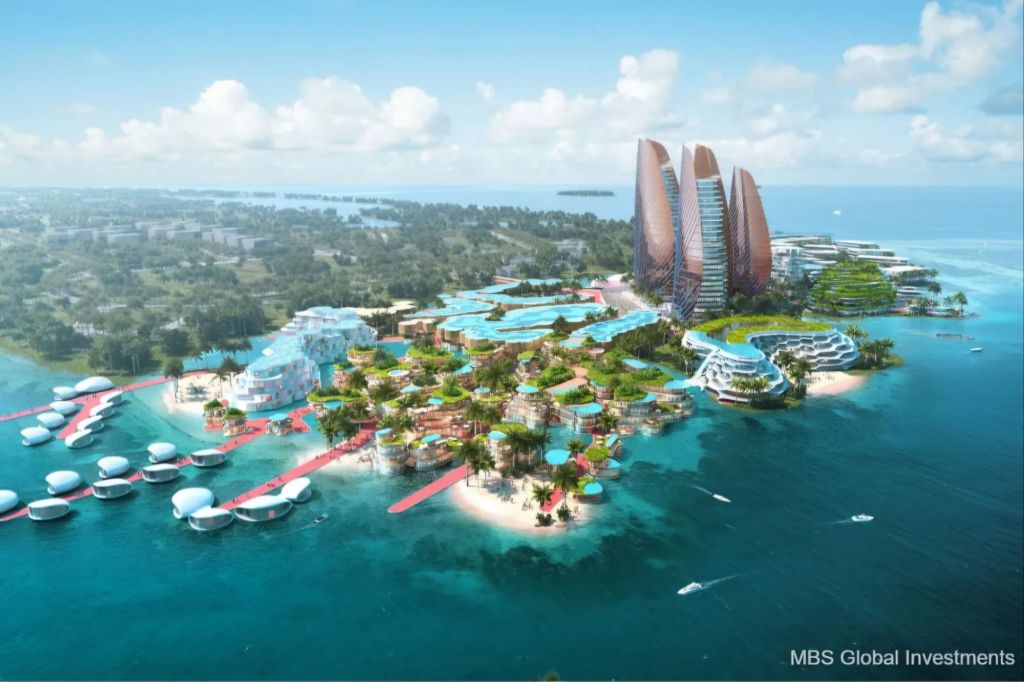
MIFC is designed to span 780,000 square meters, introducing corporate offices, luxury residences, hotels, retail spaces, and an oceanographic museum. The plan includes an international school, sports facilities, wellness centers, and a grand mosque, reflecting the Maldives’ oceanic heritage. The government estimates that the center will generate over $1 billion annually within five years, with daily footfall expected to reach 35,000 visitors.
Beyond tourism, MIFC aims to attract fintech businesses, digital finance operations, and eco-friendly enterprises. Companies registered in the financial hub will benefit from tax exemptions, making it an attractive prospect for international investors. Job opportunities are expected to expand beyond the traditional sectors, offering roles in technology, finance, and corporate services.
The commitment to renewable energy is also notable, aligning with climate resilience efforts in a nation facing rising sea levels. If executed successfully, MIFC could redefine the Maldives as more than a tourism destination, positioning it as a financial hub in the Indian Ocean.
Governance and Financial Integrity
While MIFC promises economic transformation, governance remains a critical issue. Corruption has plagued the Maldives, with the MMPRC scandal serving as a stark example. Over $90 million was embezzled from state funds, implicating officials across the government, yet few have been held accountable. Investigations have named hundreds of individuals, but legal enforcement remains weak.
State-owned enterprises have also been scrutinized for financial mismanagement, adding to concerns about regulatory oversight. With MIFC promoting financial secrecy through tax-free policies, the risk of illicit transactions—including money laundering—is significant. Without strict safeguards, the project could become a safe haven for questionable financial activities.
The judiciary, frequently criticized for selective enforcement and political influence, plays a key role in ensuring MIFC operates within legal boundaries. A failure to establish robust regulatory mechanisms could allow financial misconduct to flourish unchecked.
Legal and Territorial Implications
Land governance has been a contentious issue, particularly with Hulhumalé, the reclaimed island linked to Malé’s expansion. Disputes over legal entitlements between Urbanco and Malé City Council have raised concerns about jurisdiction. The planned abolition of the Hulhumalé Magistrate’s Court further complicates legal oversight.
If MIFC functions under separate governance, it could effectively become an autonomous zone, raising questions about its integration with national policies. Who will oversee its operations, and will it remain accountable to the state? Without clear legal definitions, there is a risk that the financial center could operate outside meaningful government supervision.
A Promising Yet Uncertain Future
MIFC has the potential to reshape the Maldives’ economic identity, moving beyond tourism and establishing itself as a financial hub. If managed with strong governance and ethical financial practices, it could drive national prosperity. However, without firm regulatory controls, it risks reinforcing economic disparity, benefiting only the wealthy and politically connected.
Malé stands at a crossroads. The next few years will determine whether MIFC becomes a beacon of economic growth or a cautionary tale of unchecked ambition. As the project progresses toward completion in 2030, its success or failure will shape the Maldives’ global financial reputation.
For more details, visit Invest Maldives.

